Distribution of Fresh Vegetable Parcels to Families Returning to Gaza City 500 returning families
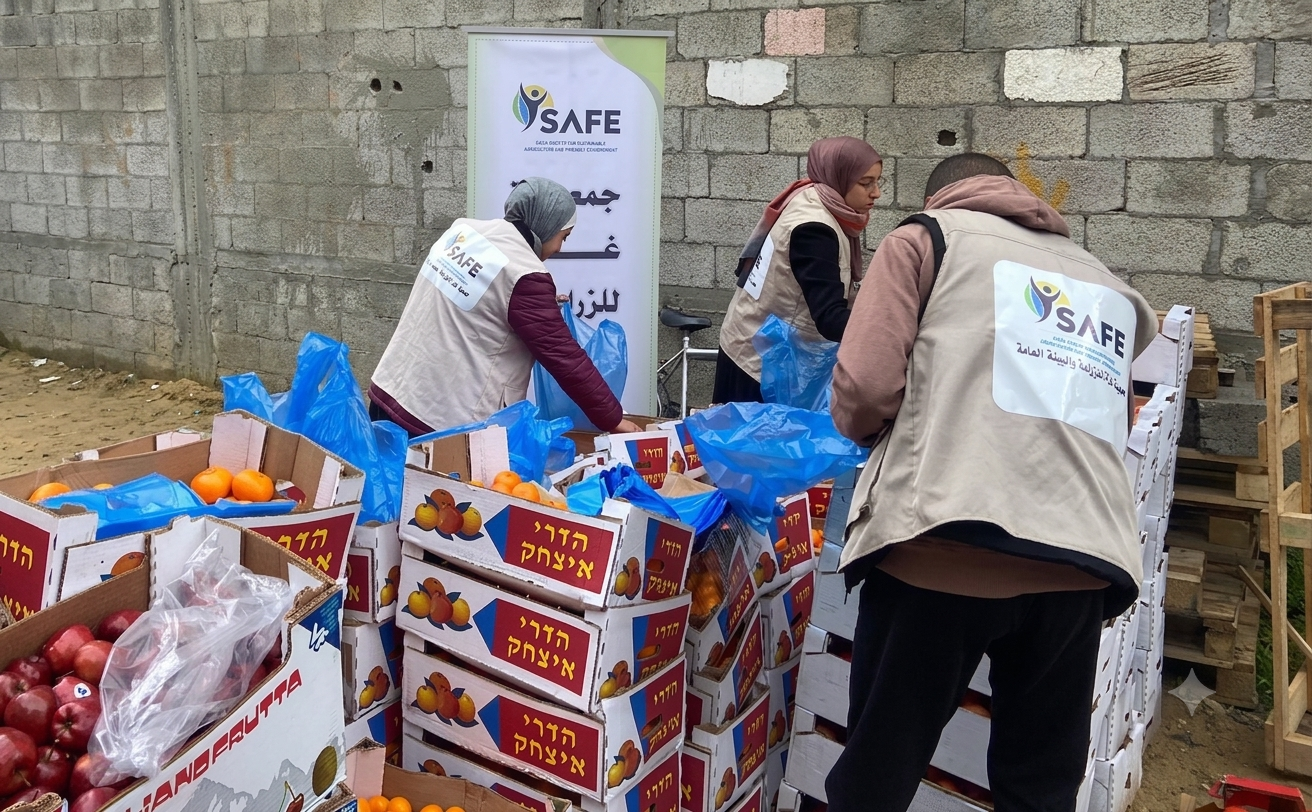
Distribution of Fresh Vegetable Parcels to Families Returning to Gaza City 500 Retuning Families
500 families in a single day the largest round in a partnership spanning a full year
500 fresh vegetable parcels at USD 25 each all delivered within a single day
More than eight months after the first distribution rounds, the need among families returning to Gaza City had not eased. Returning to a damaged home does not restore purchasing power, and disrupted supply chains kept fresh food out of reach for thousands of households dependent on dry and canned goods.
In response, the Gaza Society for Sustainable Agriculture and Friendly Environment (SAFE) delivered a third and largest round of distribution, covering 500 fresh vegetable parcels, through a donation from the Holy Family Church funded by World Central Kitchen (WCK), on 14 October 2025.
The Intervention in Numbers
- 500 fresh vegetable parcels distributed to families returning to Gaza City
- 500 beneficiary families the largest single round under this partnership
- USD 25 per parcel a total in-kind contribution of USD 12,500
- One day to complete the full operation, from sourcing to the final handover
Operational Capacity, Tested in a Single Day
Distributing 500 fresh vegetable parcels in one day is no simple operation. Fresh produce is perishable and tolerates neither delay nor poor storage, which demands precise synchronisation across sourcing, sorting, assembly, transport, and distribution. Achieving that within a single day reflects logistical readiness and trained field teams — making this intervention, for all its apparent simplicity, a genuine indicator of the organisation's operational capability.
Why Fresh Vegetables?
Because they are the gap conventional food baskets cannot fill. Canned and dry goods provide calories, but not the vitamins, fibre, and dietary diversity that children, pregnant women, and older people need. In a return context of high prices, fresh vegetables are the first item a family strikes from its shopping list.
As an organisation with an agricultural identity, SAFE sees the provision of fresh food as a natural extension of its mission.
SAFE's Role
SAFE delivered the intervention in full, without an implementing partner: identifying returning families against need-based criteria, sourcing produce and assembling parcels to ensure quality and freshness, and organising field distribution in a way that preserved families' dignity and ensured items arrived in good condition and on time.
For twenty-five dollars, fresh produce reached a returning family's table. And across a thousand families in three rounds, solidarity became a sustained commitment.