Rehabilitation of the War-Damaged Agricultural Sector, Gaza 2014
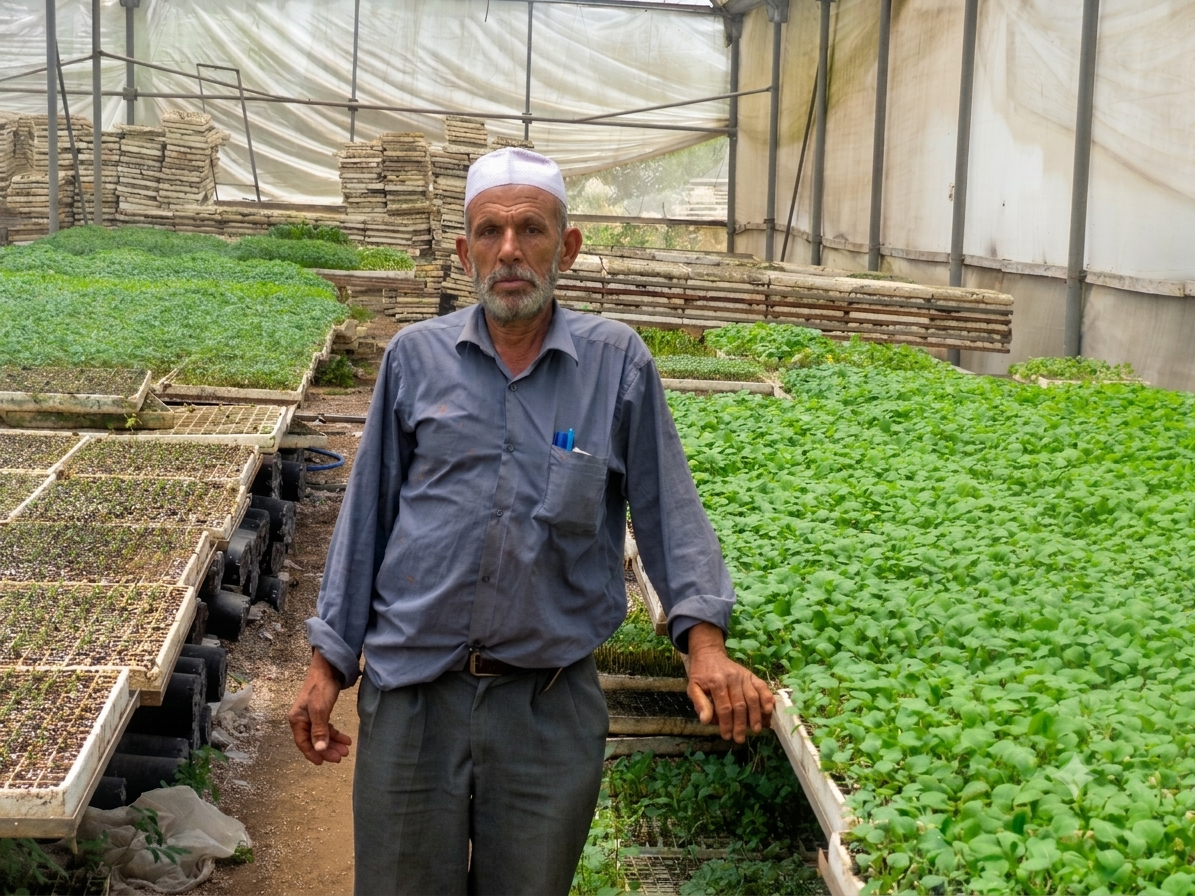
Rehabilitation of the War-Damaged Agricultural Sector, Gaza 2014
153 productive units brought back into operation across five governorates
71 nurseries, 52 greenhouses, and 30 agricultural wells with USD 500,000 in funding
When a greenhouse stops producing, more than one harvest stops with it. A nursery put out of action cuts off supply to dozens of farms that depend on it for seedlings. A destroyed well leaves an entire holding without irrigation. The damage sustained by the agricultural sector in the 2014 war was not a set of scattered individual losses, but damage to the supply links the whole sector depends on.
Working from that understanding, the project was designed to address all three links together the nursery that supplies the seedling, the greenhouse that produces the crop, and the well that irrigates both. The Gaza Society for Sustainable Agriculture and Friendly Environment (SAFE) implemented the project from October 2015 over seven months, funded by the Islamic Development Bank through Qatar Charity, at a total cost of USD 500,000.
The Project in Numbers
- 71 agricultural nurseries rehabilitated
- 52 greenhouses rehabilitated
- 30 agricultural wells reconstructed and rehabilitated
- 153 productive units in total returned to operation
- 5 governorates covered: Khan Younis, Rafah, Middle, Gaza, and North
- USD 500,000 total funding | 7 months implementation period
Full Coverage of the Gaza Strip
The project was delivered across all five of the Gaza Strip's governorates without exception a scope demanding the logistical and administrative capacity to work simultaneously at widely dispersed sites, a field network covering the entire Strip, and an engineering supervision system able to maintain quality control across 153 distinct locations within seven months.
A Methodology Built on Assessment, Not Estimation
The project applied a documented working methodology at every stage:
1. Field visits Direct inspection of every damaged nursery and greenhouse, rather than reliance on unverified reports.
2. Damage valuation per unit Individual costing of damage for each nursery and greenhouse, ensuring the intervention matched actual damage rather than a uniform allocation distributed to all.
3. Questionnaires for each unit Systematic documentation of data for every nursery and greenhouse, building an accurate database to underpin implementation and subsequent audit.
4. Monitoring disbursement to farmers Following the release of the first instalment from the funding partner to farmers, ensuring entitlements arrived on schedule.
5. Phased implementation Monitoring the first and second phases of nursery and greenhouse works, allowing quality control and the resolution of observations before moving to the next phase.
6. Final report and success stories Documenting final results alongside beneficiary success stories, capturing impact in both figures and individual accounts.
Why This Project Marks a Turning Point
The largest in SAFE's development portfolio At USD 500,000, this was the largest agricultural intervention SAFE had delivered, reflecting institutional confidence in its capacity to manage funding at that scale.
Partnership with a multilateral finance institution Delivering on behalf of the Islamic Development Bank, an international financial institution subject to rigorous audit and compliance standards, is itself an institutional endorsement of SAFE's financial and administrative systems.
Targeting productive rather than consumable infrastructure Nurseries, greenhouses, and wells are productive assets that operate for years, so every dollar spent became permanent productive capacity rather than assistance to be consumed.
Sector-level rather than individual recovery Bringing 71 nurseries back into operation restores seedling supply to hundreds of farms; rehabilitating 30 wells restores irrigation to extensive areas. The impact here reaches far beyond the number of direct beneficiaries.
SAFE's Role
SAFE led every technical and operational stage of the project: conducting field visits and assessing and costing damage for each unit, preparing questionnaires and databases, defining technical specifications for rehabilitation works, providing direct engineering supervision of each implementation phase, monitoring disbursement to farmers, maintaining quality control, and preparing the final report and documenting success stories.
Partnership for Agricultural Sector Recovery
The project reflects the value of partnership between international development finance institutions and specialised local organisations. With funding from the Islamic Development Bank through Qatar Charity, and local implementation grounded in agricultural and engineering expertise, 153 productive units returned to operation across five governorates.
A seed needs a nursery, a crop needs a greenhouse, and both need water. Restoring all three links together is what brings a sector back into production not repairing one of them.