Livelihoods Support Project for War-Affected Communities in the Gaza Strip
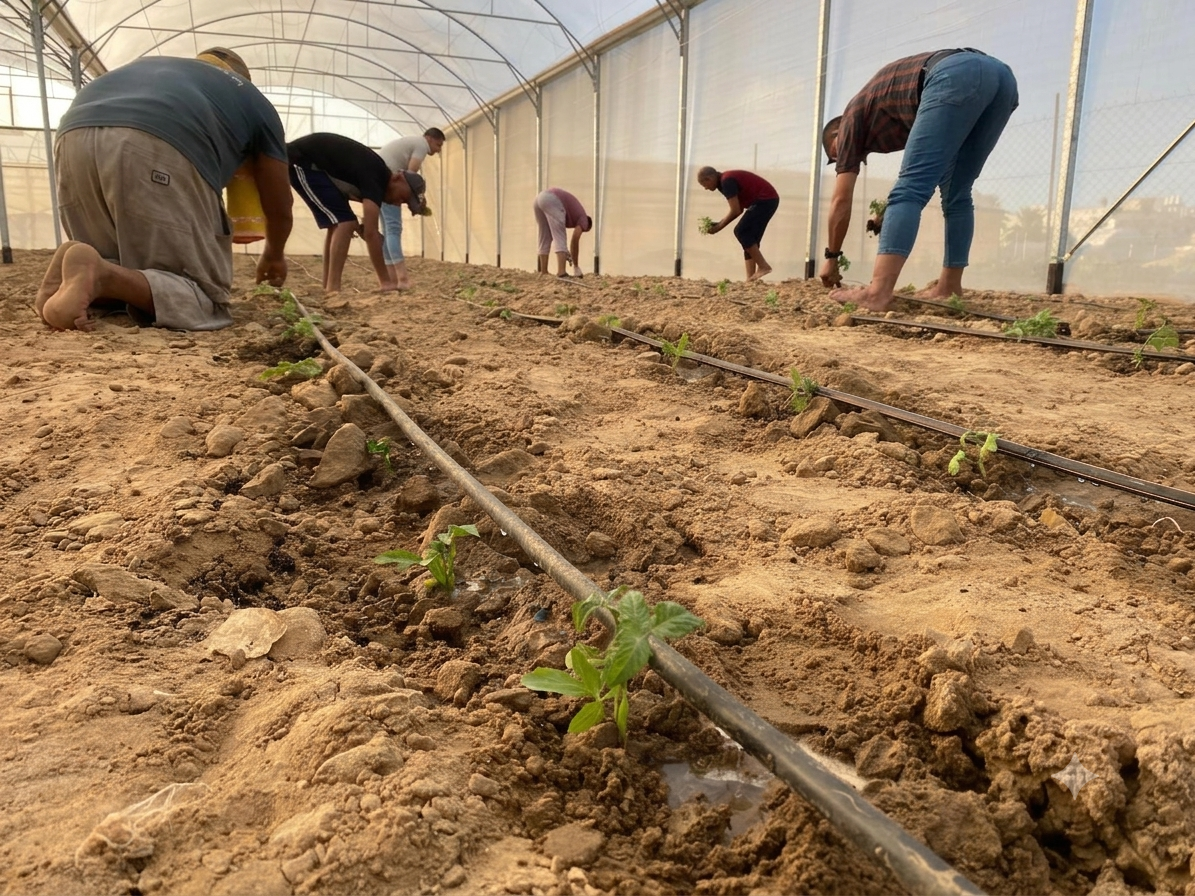
Livelihoods Support Project for War-Affected Communities in the Gaza Strip
Returning a farmer to their work, and opening a graduate's first door
Two tracks in one project: employing war-affected farmers, and training unemployed graduates
When agricultural land is damaged, a farmer loses more than a single harvest they lose their income and their professional role at once. In the agricultural areas east of Gaza, the 2012 and 2014 wars left damaged land and farmers without work, not because they had lost their skills, but because the land they worked could no longer employ them.
At the same time, a generation of graduates stood at the threshold of a closed labour market, holding qualifications with no practical experience to open the first door.
In response to both realities, the Gaza Society for Sustainable Agriculture and Friendly Environment (SAFE) implemented a livelihoods support project for war-affected communities in the Gaza Strip from November 2015 to May 2016, funded by the Swedish International Development Cooperation Agency (Sida) through Islamic Relief, at a total cost of USD 50,000.
Track One: Employing War-Affected Farmers
This track targeted farmers affected by the 2012 and 2014 wars in the agricultural areas east of Gaza, through a delivery system built on institutional verification at every step:
1. Obtaining an official list Coordinating with the Ministry of Agriculture to secure an approved list of owners of damaged agricultural land, rather than relying on self-nomination or undocumented lists.
2. Direct contact with farmers Explaining the nature and conditions of the work clearly before enrolment, ensuring participation based on full understanding rather than inaccurate expectations.
3. Official endorsement of the final list Securing Ministry of Agriculture approval of the final employment list, guaranteeing transparency and protecting the selection process from any suggestion of favouritism.
4. Matching experience to placement Assigning each farmer to a work site suited to their actual experience. Employment here was not the distribution of workdays, but the deployment of existing skill where it belongs.
5. Field-level administrative follow-up Monitoring farmers and verifying the execution of assigned tasks throughout the employment period.
6. Documenting acquired experience Preparing a final report capturing the skills participants gained during the employment period, turning the intervention from temporary income into a documented professional record.
Track Two: Training and Employing Unemployed Graduates
The project absorbed a number of graduates into SAFE's working staff, following an individualised development approach:
- Placement within a real working environment Training within SAFE's operational team rather than in classrooms detached from practice, giving each graduate field experience they can carry into their professional record.
- A tailored training plan for each graduate An individual plan for every trainee to maximise the benefit of the training period according to their specialism and strengths, rather than a uniform programme that ignores differences.
- Administrative and professional follow-up Monitoring trainees on both administrative and professional levels throughout, to ensure the quality of the development rather than merely the completion of its duration.
Why This Design?
Documented rather than discretionary targeting Relying on official Ministry of Agriculture lists to identify beneficiaries places selection beyond personal judgement and gives the project a level of transparency any party can audit.
Employment by skill, not by the hour Assigning each farmer according to their experience turns employment from cash support wrapped in work into an investment in skill that already exists.
Tailored rather than standardised training An individual plan for each graduate reflects an understanding that effective development starts from where each trainee actually stands, not from a single point for everyone.
Documentation that outlasts the project The final report on acquired experience converts seven months of work into a documented professional record that serves its holder after the funding ends.
SAFE's Role
SAFE led both tracks of the project: institutional coordination with the Ministry of Agriculture, identifying and verifying beneficiaries, matching farmers to work sites according to their experience, designing individual training plans for graduates, providing administrative and professional follow-up for participants, and documenting results and acquired experience in a final report.
Partnership for Economic Recovery
The project reflects the value of partnership with international development institutions in supporting post-crisis economic recovery. With funding from the Swedish International Development Cooperation Agency (Sida) through Islamic Relief, USD 50,000 became income for affected farmers, a first professional experience for graduates, and the beginning of a return to the economic cycle rather than dependence on assistance.
Giving an affected person assistance is one thing; returning them to their work is another. The first covers a day; the second opens a path.