Water-Efficient Animal Fodder Production Project
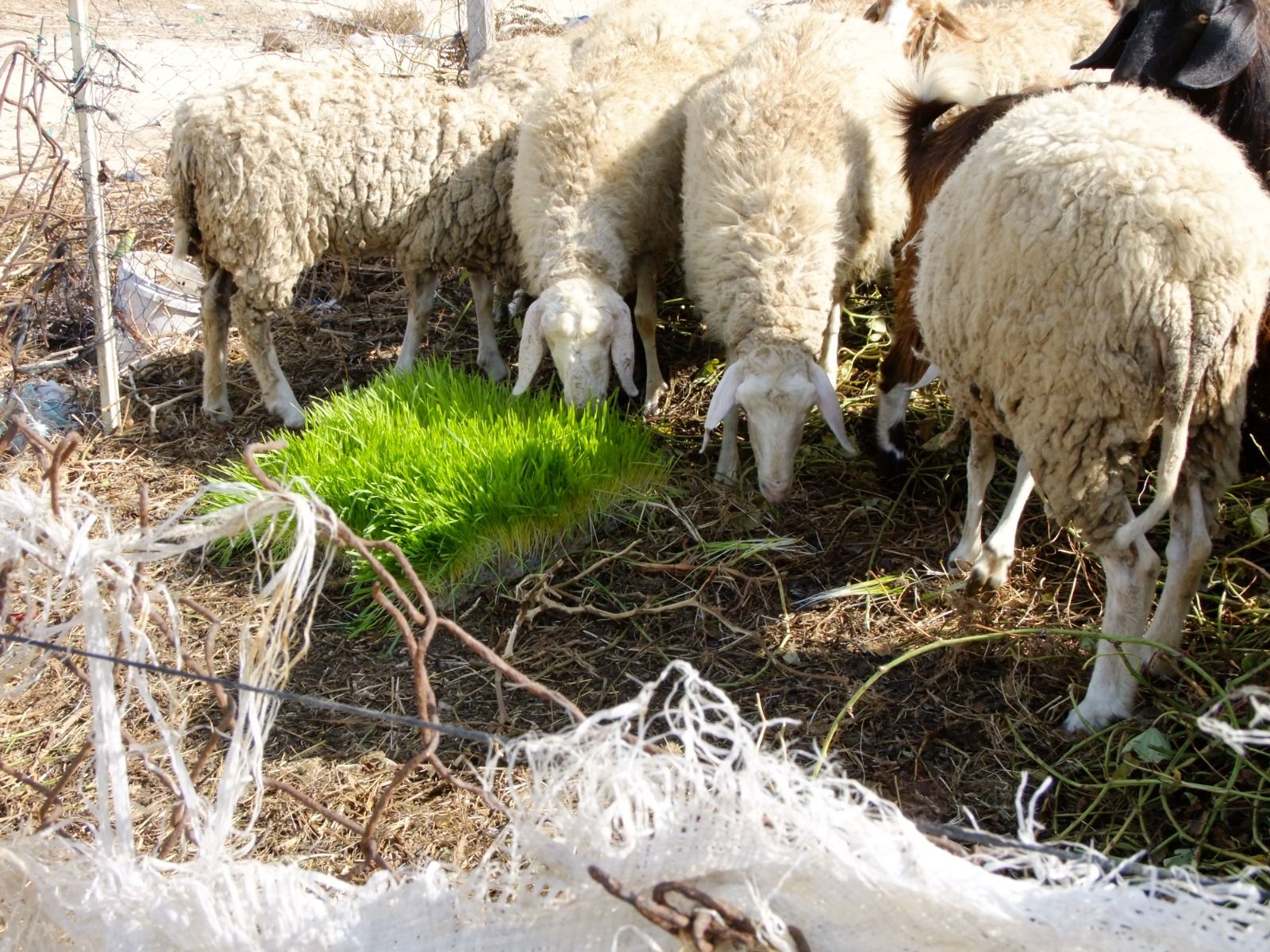
Water-Efficient Animal Fodder Production Project
When land is scarce and water scarcer, innovation stops being an option
A hydroponic green fodder pilot + 100 dunams of fodder crops irrigated with treated water
Feed is the heaviest cost item in any livestock enterprise. In the Gaza Strip the problem compounds: limited agricultural land, water that is both scarce and saline, and heavy dependence on imported fodder subject to volatile prices and interrupted supply. The result is a hard equation for the livestock keeper a herd that needs feeding every day, and a feed supply they cannot control.
Working from that understanding, the project was designed to address the problem at its root: producing fodder locally through techniques that do not consume what Gaza does not have neither extensive land nor abundant fresh water. The Gaza Society for Sustainable Agriculture and Friendly Environment (SAFE) delivered the project across both components in August 2011, at a total cost of USD 46,000.
Component One: Green Fodder Through Hydroponics
Middle Governorate | 9 months | USD 36,000
A pilot was established for green fodder production using hydroponics, providing the controlled climatic conditions that allow production outside the natural growing season.
Why this technique?
- No soil required — fodder is produced in a controlled environment, breaking free of the constraint of limited agricultural land
- Far lower water consumption — the closed cycle recirculates water rather than losing it to soil and evaporation, the decisive consideration in a water-scarce environment
- Year-round production — controlling climatic conditions breaks seasonality, making green fodder available in periods when it is naturally absent and prices peak
- A short production cycle — hydroponic green fodder is ready in days rather than months, giving the keeper a continuous supply
Component Two: Fodder Crops Irrigated with Treated Water
Bedouin Village, North Gaza | 100 dunams | 6 months | USD 10,000
Fodder crops such as alfalfa were produced across 100 dunams (approximately 10 hectares), drawing on treated water from the water collection plant in North Gaza.
Why treated water?
- A non-conventional water resource — using treated water frees scarce fresh water for uses where nothing can substitute for it
- A double environmental gain — it converts the burden of disposing of treated water into a productive resource, a practical application of circular economy principles
- A deliberate crop choice — directing treated water to fodder crops rather than crops for direct human consumption is the internationally established technical practice in water reuse, maximising the benefit while maintaining safety requirements
Targeting the Bedouin Village was equally deliberate: it is a pastoral community that depends on livestock as a principal income source, where the impact of securing fodder is direct and multiplied.
SAFE's Role
SAFE led both components: assessing the land and water constraints on fodder production, designing the hydroponic pilot and defining its technical specifications and climatic conditions, selecting production sites and crops in the Bedouin Village, providing technical supervision of irrigation with treated water, and monitoring production and evaluating results throughout both implementation periods.
Partnership for Sustainable Food Security
The project was funded by the Comité de Bienfaisance et de Secours aux Palestiniens (CBSP) – France, as part of efforts to support agricultural innovation and food security in the Gaza Strip.
The value of an agricultural project is not measured by what it produces this season, but by the constraint it breaks. This one broke two: land and water.