Training Programme for Newly Graduated Agricultural Engineers
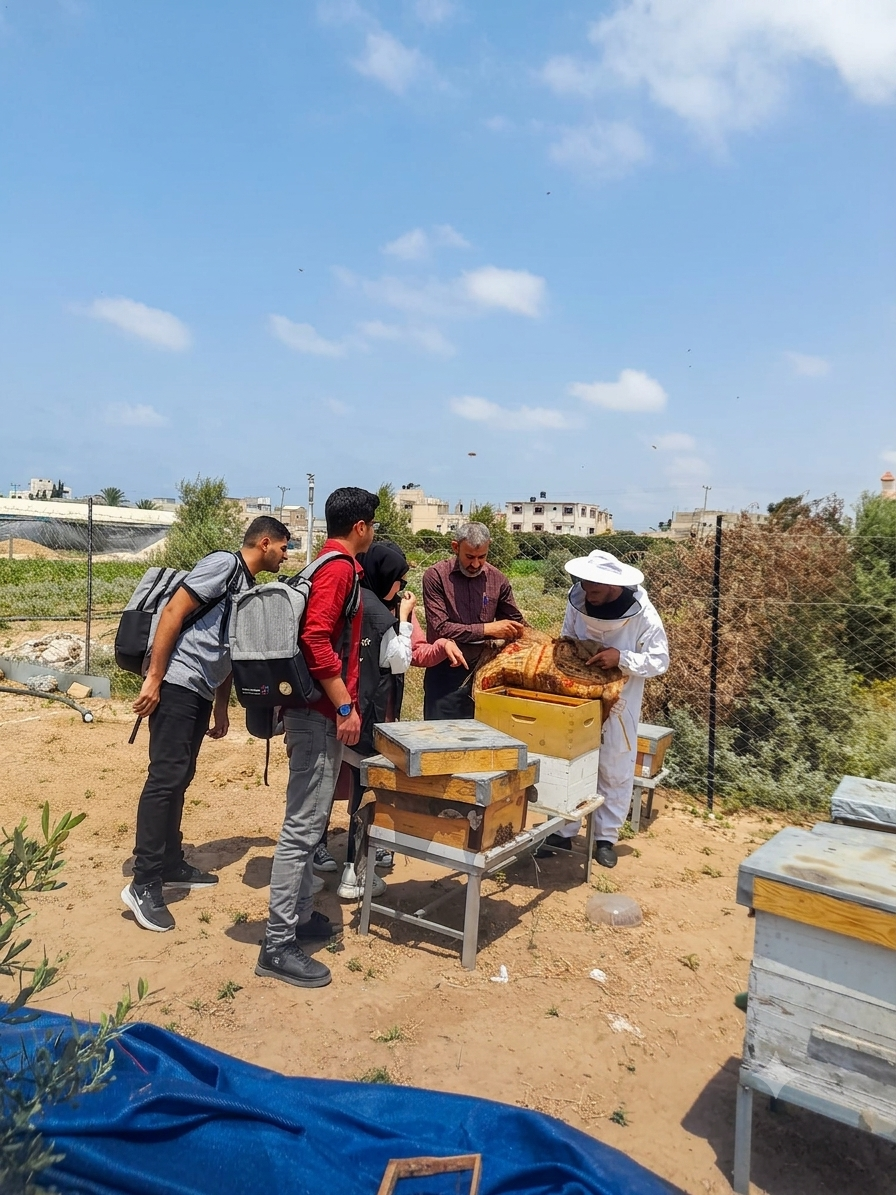
Training Programme for Newly Graduated Agricultural Engineers
From academic degree to field competence
Integrated technical training covering the crop production chain from field to post-harvest
An agricultural engineer graduates with solid theoretical knowledge, but enters the labour market required to do something else: diagnose an infestation in a field, set a fertilisation programme, select a pesticide and its dosage safely, and manage a crop after harvest so its value is not lost. This gap between the qualification and field competence is what keeps many graduates out of genuine employment, and deprives the agricultural sector of professionals it could have drawn on.
In response, SAFE delivered a specialised training programme for newly graduated agricultural engineers in Gaza Governorate in August 2011, at a total cost of USD 6,000 over six months.
Programme Modules
The programme was designed to cover the full crop production chain rather than a single specialism:
- Crop production — fundamentals of crop management from planting through harvest
- Plant protection — diagnosis and control of pests and diseases
- Fertilisation — building plant nutrition programmes according to crop and soil requirements
- Pesticides — safe and effective use, an area touching product safety, worker health, and consumer health alike
- Post-harvest handling — preserving crop quality and reducing post-harvest losses
- Management and quality — the administrative and oversight dimension that separates a competent technician from a supervisor able to run a production operation
Why This Intervention Matters
Building the sector's human capital — Productive assets and infrastructure need people able to manage them well. Investment in technical professionals is what ensures farms, greenhouses, and agricultural facilities are run with current knowledge rather than inherited practice alone.
Youth employment — Applied technical training raises a graduate's employment prospects directly, converting a degree from a theoretical qualification into employable competence in a competitive market with limited openings.
Compounding impact — Unlike interventions whose effect ends when they do, training travels with the trainee into every farm they work on and every farmer they advise, for years after the programme closes.
Low cost, high return — At just USD 6,000, this is among the lowest-cost interventions in SAFE's portfolio and among the longest in the reach of its impact.
SAFE's Role
SAFE led the programme drawing on its agricultural and technical expertise: designing the curriculum and its modules according to actual market needs, selecting trainees from among new graduates, delivering theoretical and applied training across its various areas, and providing follow-up and evaluation throughout the programme period.
An Investment in the Next Generation
The programme reflects a conviction rooted in SAFE's approach: that the most important thing to build in an agricultural sector is neither an asset nor a facility, but a qualified professional capable of building and managing both.
A well runs dry, a facility ages, a flock is depleted. A trained engineer remains and passes on what they learned.