Umm Hassan... From Al-Mawasi tents to a safe home
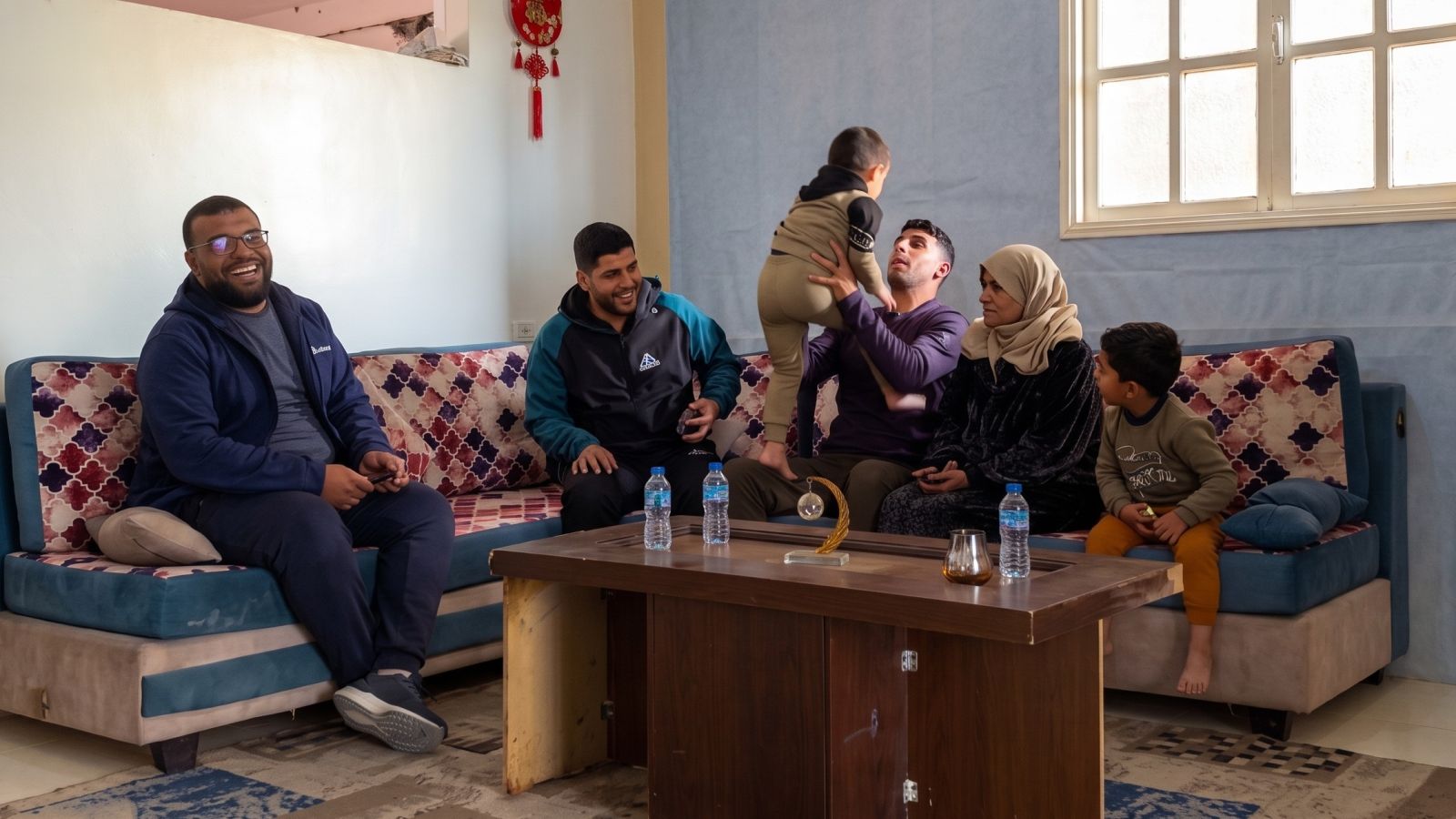
Japanese Neighbourhood, Khan Younis
Like thousands of other families uprooted by the war from their homes, Umm Hassan found herself with her family in the tents of Al-Mawasi, west of Khan Younis. Her house, where she had spent decades of her life, did not escape the shelling and destruction that struck entire neighbourhoods across the Strip. Returning to it seemed like a distant hope, at a time when thousands of other families were living through the same reality of displacement and loss of shelter.
The tent was not a merciful place for a woman her age, amid the difficult humanitarian and living conditions that all of Gaza endured during the war. The bitter cold crept in mercilessly, especially through the long nights, amid a scarcity of even the most basic necessities of a dignified life that most displaced people were denied. And when she thought about returning to her damaged house, the picture was no better: broken doors, walls brought down by the machinery of war, and open gaps that became a passage for insects, rodents, and even snakes — causing skin conditions that affected her young grandchildren before anyone else. On top of all this, there was no fence to protect the children from falling off the roof — a danger she lived with every day, carrying the anxiety of both a mother and a grandmother at once.
Displacement also scattered the family, just as the war scattered the families of thousands of Palestinians across Gaza, and her sons were separated from her for a period of time — adding loneliness to the long list of what she had to bear amid deeply difficult humanitarian and living conditions.
With the Emergency Rehabilitation Project implemented by the Gaza Society for Sustainable Agriculture and Friendly Environment (SAFE) in partnership with the UNDP, as part of early recovery efforts amid the war's continuing impact on the Strip, change began to take real shape: the walls and doors were rebuilt, a protective fence was installed around the roof, and the bathroom and kitchen were rehabilitated. The rehabilitation was not a cold technical exercise — it was a direct response to every danger the family faced daily, at a time when thousands of families in Gaza are still waiting for their own chance to return to a safe home.
Once the work was complete, Umm Hassan and her family returned home. She says, her voice carrying clear gratitude: "The project was very beneficial for us... thank God it made our home safe, so the children are safer now."
She recalls the harshness of those days in a short sentence that captures a great deal: "The house was severely damaged, and they were far from me, but after the house was repaired, we were finally reunited."
She did not forget to commend those who carried out the work, despite the difficult conditions surrounding humanitarian efforts in Gaza: "The engineers worked with complete dedication, in coordination with the workers and technicians."
Today, Umm Hassan lives in her home once again, surrounded by her children and grandchildren — in a place that no longer threatens the children with falling, and no longer lets in the cold or the insects. It has become, once more — amid a reality where so many still remain without shelter — a real home that brings the family together under one roof.