Empowering War-Affected Farmers Through Solar Energy Units for Poultry Farms
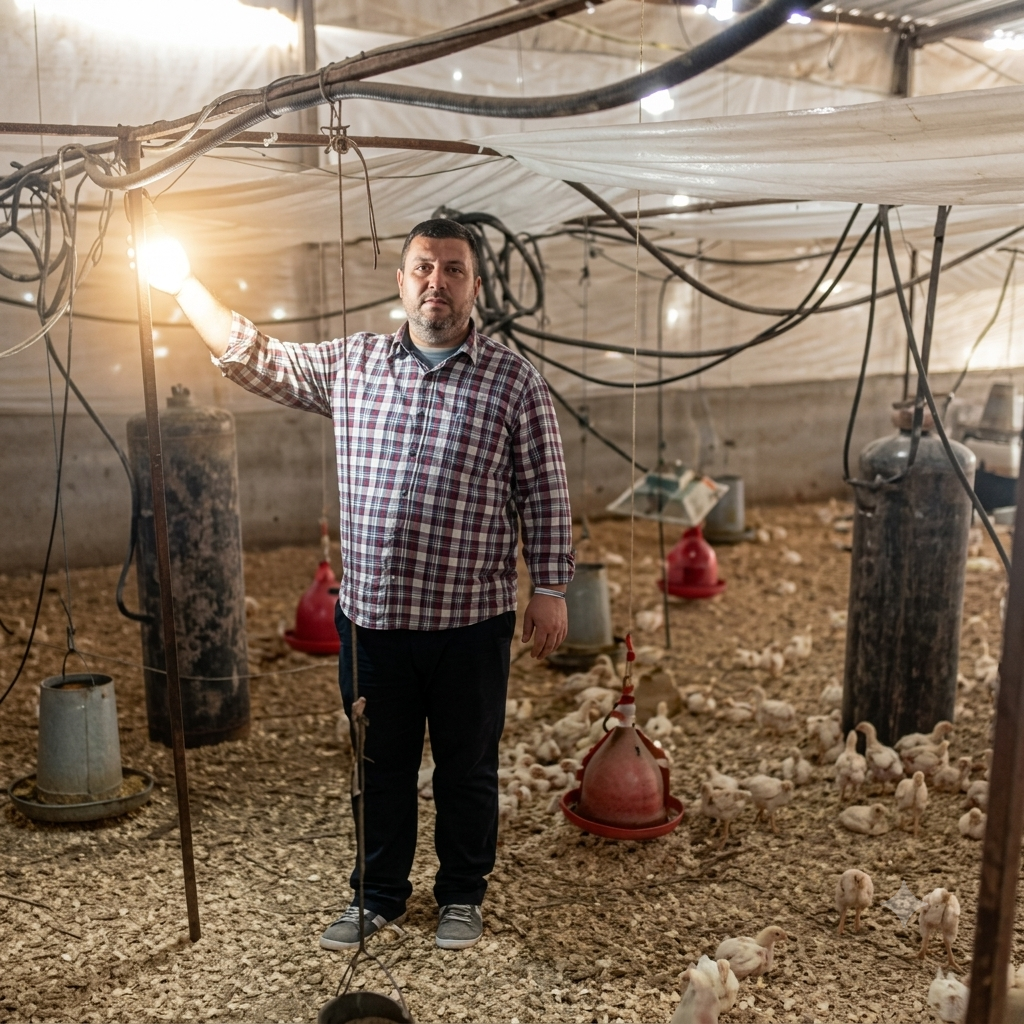
Solar Energy Units for Poultry Farmers
When electricity is a condition of survival, not a convenience
58 solar energy units, individually engineered per farm selected from more than 200 farms assessed
On a poultry farm, electricity is not a comfort. Ventilation, heating, and watering systems all run on power, and an outage of a few hours at the wrong moment can mean the loss of an entire flock. In the Gaza Strip, where chronic power interruption is a daily reality, a poultry farmer faces two options: a generator that consumes close to what the farm earns, or a daily gamble on losing everything.
After the 2014 war, that equation became harder still for farmers whose facilities had already been damaged.
In response, the Gaza Society for Sustainable Agriculture and Friendly Environment (SAFE) implemented a project empowering war-affected poultry farmers by equipping their farms with solar energy units across the Gaza and North governorates, from June 2015 to February 2016, funded by the Islamic Development Bank and the United Nations Development Programme / Deprived Families Economic Empowerment Programme (UNDP/DEEP), at a total cost of USD 149,380.
The Project in Numbers
- 58 solar energy units installed on war-damaged poultry farms
- More than 200 farms visited and assessed in the field to select beneficiaries
- 58 separate engineering designs a bespoke system for each farm according to its energy requirement
- 4 workshops for beneficiaries across the implementation phases
- An economic feasibility study calculating the actual savings generated by the shift to solar power
- USD 149,380 total funding | 9 months implementation period
Selection by Assessment, Not by List
Project teams visited more than 200 poultry farms to select the 58 that met the project's criteria meaning every beneficiary farm was chosen from roughly four that underwent field inspection.
Beneficiary names were endorsed in coordination with the Ministry of Agriculture, with the grant value deducted from each farm's total assessed damages a measure that prevents duplication of support and preserves the accuracy of the sector-wide compensation record. That level of financial and coordination discipline is not standard practice across comparable interventions.
Bespoke Engineering for Every Farm
The project was not a distribution of uniform off-the-shelf units, but an individual engineering design process:
1. Energy needs assessment Determining each farm's consumption individually according to its size and operating systems.
2. Engineering drawings Designing a solar energy system suited to each farm, with drawings specific to it.
3. Competitive tender Tendering the required quantities and materials, ensuring best value for the funding.
4. Installation supervision Monitoring the delivery and installation of units on beneficiary farms.
This approach meant each farm received a system matched to its actual requirement neither larger than needed, wasting funding, nor smaller, leaving the farm unable to operate.
Training: An Asset Does Not Run Without Someone to Run It
The project delivered four workshops for beneficiaries at SAFE's offices across the implementation phases, alongside field visits to installation sites to explain equipment operation directly on the installed system.
The rationale is clear: a solar system is a technical asset requiring knowledge to operate and maintain. Handing it over without preparing the beneficiary means it fails within months. Pairing installation with training is what converts equipment into lasting productive capacity.
Measuring Impact Rather Than Assuming It
The project concluded with a data-based evaluation phase:
Economic feasibility study Calculating the actual savings farmers achieved through use of the solar energy system, translating impact into a measurable financial figure rather than a general description.
Documented success stories Preparing a number of success stories arising from use of the system, capturing impact at the individual level alongside the figures.
Measuring financial savings after the intervention is an advanced evaluation practice, moving the project from "delivered" to "proven viable".
Why This Project Matters Today
An energy transition before it became a funding priority Delivered in 2015, years before renewable energy and green transition rose to the top of international funding agendas, the project stands as documented evidence of SAFE's experience in this field rather than a late entry into it.
The beginning of the UNDP partnership This is among the earliest documented partnerships between SAFE and UNDP, through the DEEP programme a relationship that later developed into an extended project portfolio that continues today.
Economic empowerment rather than relief Targeting operating costs instead of distributing assistance means a permanent reduction in farm expenses and an improved profit margin season after season.
SAFE's Role
SAFE led every stage of the project: conducting field visits to more than 200 farms and selecting beneficiaries against the criteria, assessing energy requirements for each farm, preparing engineering designs and drawings, managing tendering and procurement, coordinating with the Ministry of Agriculture on beneficiary endorsement and grant values, supervising installation, delivering workshops and training visits, and preparing the economic feasibility study and documenting success stories.
Partnership for Sustainable Empowerment
The project reflects the value of partnership between international development finance institutions, United Nations programmes, and specialised local organisations. With funding from the Islamic Development Bank and UNDP/DEEP, 58 farmers gained an independent power source that lowers their costs and protects their production.
Assistance closes one month's gap. Reducing the cost of energy closes it every month with no need for further assistance.